
Paint correction in Fair Oaks, CA can remove or reduce swirl marks, oxidation, haze, water spots, light scratches, and other visible paint defects that make a vehicle look older than it really is. Rather than hiding these marks under wax, paint correction uses machine polishing and carefully selected abrasives to refine the painted surface and restore clarity and gloss.
Fair Oaks drivers see paint defects for plenty of reasons. Automatic car washes can leave fine circular marks. Dust can scratch paint when it is wiped from a dry vehicle. Hard water can leave mineral deposits. Years of sun exposure and neglected paint can contribute to oxidation and fading. Improper polishing can leave haze or holograms that become easy to see in direct California sunlight.
Royal Tint provides paint correction for drivers from Fair Oaks, CA, Sacramento, CA, Rocklin, CA & Rancho Cordova, CA. Our Rancho Cordova location is at 3515 Sunrise Blvd Suite #21, Rancho Cordova, CA 95742, close to Fair Oaks and surrounding Sacramento County communities.
If your paint looks dull, scratched, hazy, or covered in swirl marks, call Royal Tint at (916) 502-2994 in Rancho Cordova or (916) 840-0030 in Rocklin. You can also contact Royal Tint online to schedule an appointment.
Table of Contents
- What Is Paint Correction?
- What Causes Swirl Marks on Car Paint?
- What Does Oxidized Paint Look Like?
- Can Paint Correction Remove Swirl Marks?
- Can Paint Correction Remove Oxidation?
- What Other Paint Defects Can Polishing Reduce?
- 1-Step vs 2-Step Paint Correction
- How Paint Correction Actually Removes Defects
- Why Paint Inspection Comes First
- Why Decontamination Matters Before Polishing
- Can Every Scratch Be Removed?
- Should New Cars Get Paint Correction?
- Paint Correction Before Ceramic Coating
- Paint Correction Before Paint Protection Film
- How to Keep Swirl Marks From Coming Back
- Paint Correction Near Fair Oaks, CA
- Paint Correction FAQs
What Is Paint Correction?
Paint correction is a polishing process used to remove or reduce visible defects in automotive paint.
Royal Tint’s paint correction and detailing service includes 1-step and 2-step correction options for different levels of paint damage.
The process may involve:
- Washing
- Paint decontamination
- Clay treatment
- Machine compounding
- Machine polishing
- Paint inspection
- Surface preparation before protection
Paint correction works by refining a very small portion of the upper painted surface or clear coat where many defects are located.
This is different from simply filling marks with wax or glaze.
A filler may temporarily make a scratch or swirl less noticeable. Paint correction aims to physically level or refine the surrounding surface so light reflects more evenly.
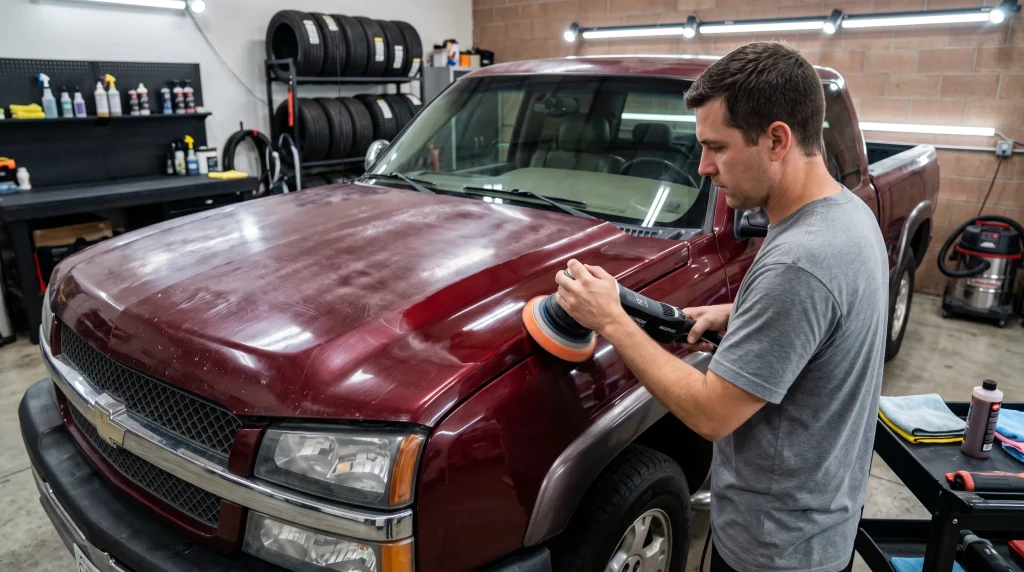
That difference is what can bring clarity back to dull or swirled paint.
What Causes Swirl Marks on Car Paint?
Swirl marks are fine scratches that often become easy to see when sunlight or bright lighting hits the paint.
They may look circular because light reflects across scratches running in many directions.
Common causes include:
- Automatic brush car washes
- Dirty wash mitts
- Dirty drying towels
- Wiping dust from dry paint
- Improper hand washing
- Rough detailing towels
- Poor polishing methods
- Repeated contact with contaminated surfaces
Dark colors often make swirl marks easier to see.
Black, dark blue, deep red, and dark gray vehicles can show fine paint defects under direct sun even when the vehicle looks clean in the shade.
Paint correction in Fair Oaks, CA can reduce these marks by polishing the damaged surface.
3M states that its automotive machine polishing products can remove compound swirls, microfine scratches, light oxidation, water spots, and other minor surface defects from automotive finishes.
Meguiar’s also describes professional correction compounds as products designed to remove swirls, oxidation, light to moderate scratches, and other paint defects.
What Does Oxidized Paint Look Like?
Oxidation can make automotive paint look faded, cloudy, chalky, or dull.
Instead of reflecting light sharply, the surface may appear flat.
Oxidation can develop when paint is exposed to oxygen, sunlight, weather, and environmental conditions over time, especially if the finish has not received regular care.
Signs may include:
- Faded color
- Cloudy paint
- Chalky appearance
- Loss of gloss
- Uneven color
- Dull panels
Older single-stage paints and neglected finishes may show oxidation differently from modern clear-coated paint.
The amount of correction possible depends on the paint system and how much usable material remains.
This is why a paint inspection comes before aggressive polishing.
Can Paint Correction Remove Swirl Marks?
Yes, many swirl marks can be removed or greatly reduced through machine polishing.
Royal Tint states that its 1-step and 2-step paint correction process can reduce up to 90% of swirls depending on the condition of the vehicle.
A lighter correction may be enough when the paint has:
- Fine wash marks
- Light swirls
- Minor haze
- Small surface defects
Heavier defects may need more than one polishing stage.
What this means for paint correction in Fair Oaks, CA is that not every car needs the same amount of work.
A lightly swirled newer vehicle may respond well to one polishing stage.
A dark vehicle that has spent years in automatic brush washes may need a stronger correction process.
The paint decides the approach.
Can Paint Correction Remove Oxidation?
Paint correction can remove or reduce some forms of oxidation when enough healthy paint or clear coat remains.
3M states that its machine polish can remove light oxidation along with fine scratches and swirl marks.
Meguiar’s also lists oxidation among the defects its automotive correction compounds are made to remove.
The amount of improvement depends on how far the damage has progressed.
Light surface oxidation may respond well to polishing.
Severe paint failure is different.
If clear coat is peeling, flaking, or failing, polishing cannot replace missing paint. A body shop or refinishing service may be needed instead.
This distinction matters.
Paint correction works on defects within a usable painted surface.
It does not repaint damaged panels.
What Other Paint Defects Can Polishing Reduce?
Swirls and oxidation are two common reasons people schedule paint correction in Fair Oaks, CA, but they are not the only issues polishing may address.
Depending on depth and condition, correction may reduce:
Water Spots
Mineral deposits can leave visible marks after water evaporates.
Some marks sit on the surface.
Others can etch into the finish.
Light defects may respond to polishing, while deeper etching may require more work.
Light Scratches
Fine scratches that remain within the correctable layer may be reduced or removed.
Deep scratches need more caution.
Haze
Paint may look cloudy after poor polishing, heavy washing wear, oxidation, or fine surface damage.
Polishing can restore clearer light reflection when the defect is correctable.
Holograms
Improper machine polishing can leave visible patterns in paint, especially on darker vehicles.
A finishing polish can reduce these marks.
Compound Marks
A cutting compound can leave its own haze or marks if the surface is not properly refined afterward.
A follow-up polishing stage can improve the finish.
Mild Staining
Some surface staining may respond to cleaning and polishing.
The result depends on what caused the stain and how deeply it affected the finish.
1-Step vs 2-Step Paint Correction
Royal Tint offers both 1-step and 2-step paint correction.
The difference comes down to paint condition and how much defect removal is needed.
1-Step Paint Correction
A 1-step correction uses one primary polishing stage to improve the paint.
Royal Tint describes this service as suited to lighter imperfections and swirl marks.
A 1-step process may work well for:
- Light swirls
- Fine wash marks
- Mild haze
- Newer paint with minor defects
- Vehicles needing a visual refresh
The goal is to balance defect removal with a glossy finish in one polishing stage.
2-Step Paint Correction
A 2-step correction generally uses one stage for stronger defect removal followed by another stage to refine the finish.
Royal Tint describes its 2-step process as being intended for deeper defects, more severe scratches, and oxidation.
The first stage may use a stronger compound and pad combination.
The second stage then refines the surface to improve clarity and gloss.
A 2-step process may make sense for:
- Heavier swirl marks
- Oxidation
- More visible scratches
- Compound haze
- Neglected paint
- Dark paint with many visible defects
The real question is not which package sounds better.
It is what the paint actually needs.
How Paint Correction Actually Removes Defects
Automotive clear coat reflects light from the surface.
When that surface contains thousands of fine scratches, light scatters across the damaged areas.
That is why heavily swirled paint can look hazy or dull even after the vehicle is washed.
Machine polishing uses an abrasive combination to refine the uppermost surface.
As the surrounding surface becomes more even, light reflects more consistently.
The result can be:
- Greater clarity
- Deeper reflections
- Less visible swirling
- Better gloss
- Cleaner-looking color
Paint correction in Fair Oaks, CA is not about adding a shiny material over bad paint.
It is about improving the surface itself.
That is also why the amount of material removed needs to be controlled.
There is a limit to how much clear coat should be polished away.
Why Paint Inspection Comes First
Before polishing begins, the vehicle should be inspected.
Different panels may have different histories.
One door may have factory paint.
A fender may have been repainted after an accident.
The hood may have heavier scratches than the roof.
A rear quarter panel may already have thin clear coat from previous correction work.
An inspection helps identify:
- Swirls
- Scratches
- Oxidation
- Water spots
- Etching
- Previous body work
- Repainted panels
- Clear-coat failure
- Areas needing extra caution
This allows the correction plan to fit the condition of the vehicle.
A quality paint correction should not chase every mark at the expense of paint health.
Some defects are better left reduced rather than aggressively polished.
Why Decontamination Matters Before Polishing
A vehicle can feel clean after washing while still having particles bonded to the paint.
These may include:
- Road film
- Tar
- Industrial fallout
- Brake contamination
- Tree residue
- Embedded dirt
Running a polishing pad over contaminated paint can interfere with the correction process.
That is why decontamination commonly comes before machine polishing.
Royal Tint describes clay-bar treatment as part of its paint correction process.
Clay treatment helps remove bonded material that normal washing may leave behind.
Once the surface is clean, the polishing stage can work directly on the paint.
Here is why preparation matters.
Polishing a dirty surface does not give the same starting point as polishing properly cleaned paint.
Can Every Scratch Be Removed?
No.
Paint correction has limits.
A scratch that sits within the upper portion of the clear coat may respond well to polishing.
A deeper scratch may pass through too much of the clear coat to remove safely.
If a scratch reaches:
- Base color
- Primer
- Bare metal
- Plastic beneath the paint
machine polishing cannot restore the missing material.
The safest goal may be to reduce how noticeable a deep scratch looks rather than trying to remove it completely.
This is one reason paint correction should be based on inspection rather than promises about making every panel perfect.
A good result protects the future of the paint while improving its current appearance.
Should New Cars Get Paint Correction?
Some do.
A vehicle can be new and still have paint defects.
Before delivery, cars may experience:
- Transportation
- Outdoor storage
- Dealer washing
- Dry wiping
- Water spotting
- Dust
- Adhesive residue
- Repeated handling
Some dealerships wash vehicles with methods that leave fine swirls before the owner takes delivery.
Other new cars arrive with very clean finishes.
There is no reason to polish good paint just because the vehicle is new.
Inspect it first.
If light defects are present, a mild correction before adding protection can create a cleaner starting point.
Paint Correction Before Ceramic Coating
Paint correction and ceramic coating pair naturally because ceramic coating is transparent.
If you apply a coating over swirl marks, those marks do not simply disappear.
They may remain visible beneath the coated surface.
That is why many owners choose to refine the paint first.
A common sequence is:
- Wash
- Decontaminate
- Inspect
- Correct defects
- Refine the finish
- Prepare the surface
- Apply ceramic coating
Royal Tint installs BLASK ceramic coatings and can discuss coating after correction.
Ceramic coating can add:
- Slickness
- Gloss
- Hydrophobic water behavior
- Chemical resistance
- Easier washing
It does not stop future wash scratches by itself.
Good washing habits remain part of preserving the corrected finish.
Paint Correction Before Paint Protection Film
Paint Protection Film is also transparent.
If PPF is installed over visible scratches or swirls, those defects may remain visible underneath.
This is why paint condition should be checked before PPF goes on the vehicle.
Not every panel needs polishing before film.
A clean new vehicle with very few defects may need only proper preparation.
A heavily swirled hood may benefit from correction before being covered.
Royal Tint installs Onyxhield Paint Protection Film for drivers who want physical protection against road debris, rock chips, and light impacts.
Paint correction improves the finish already there.
PPF helps protect that finish afterward.
They solve different problems.
How to Keep Swirl Marks From Coming Back
Paint correction can remove or reduce existing swirls, but washing habits determine whether new ones appear.
Avoid Dirty Automatic Brushes
Brush-style washes can drag contamination across painted surfaces.
Do Not Wipe Dry Dust
Fair Oaks and the greater Sacramento area can leave vehicles dusty between washes.
Rubbing a dry towel across dusty paint can create fine marks.
Wash the surface instead.
Use Clean Wash Mitts
A wash mitt filled with grit becomes an abrasive tool.
Use Clean Drying Towels
Drying is another time when paint gets a lot of physical contact.
Do Not Scrub Stubborn Contamination
Soften and remove bug residue, sap, or other material using suitable cleaning methods.
Consider Ceramic Coating
A slick ceramic-coated surface can make washing easier and may reduce how much force is needed to remove contamination.
Consider PPF for High-Wear Areas
Paint Protection Film can add a physical layer over areas that receive frequent contact or road exposure.
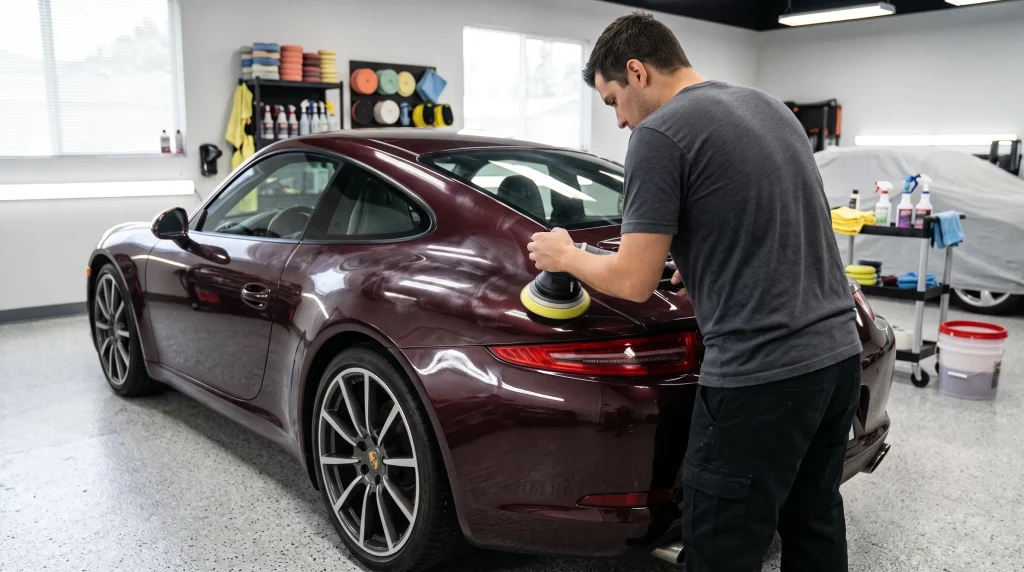
The goal after paint correction in Fair Oaks, CA is to avoid repeating the habits that caused the defects in the first place.
Paint Correction Near Fair Oaks, CA
Royal Tint provides paint correction for drivers from Fair Oaks, CA, Sacramento, CA, Rocklin, CA & Rancho Cordova, CA.
For Fair Oaks drivers, our Rancho Cordova location is nearby:
Royal Tint Sacramento / Rancho Cordova
3515 Sunrise Blvd Suite #21
Rancho Cordova, CA 95742
(916) 502-2994
Our second location is:
Royal Tint Rocklin
5600 Pacific St Suite 100
Rocklin, CA 95677
(916) 840-0030
Royal Tint also serves drivers from Folsom, CA, Orangevale, CA, Citrus Heights, CA, Carmichael, CA, Roseville, CA, Granite Bay, CA, Elk Grove, CA, El Dorado Hills, CA, Loomis, CA, Lincoln, CA, and Antelope, CA.
Our services include:
- Paint correction and detailing
- Ceramic coating
- Paint Protection Film
- Window tinting
- Windshield protection film
Royal Tint is certified by Rayno, Onyxhield, and BLASK and works with these brands as a vendor.
Royal Tint also has more than 700 combined customer reviews with a 5-star rating based on the business information supplied by Royal Tint.
If your paint is covered in swirls or has lost its gloss, call (916) 502-2994 for Rancho Cordova or (916) 840-0030 for Rocklin.
You can also contact Royal Tint online to schedule an inspection.
Paint Correction FAQs
1. Can paint correction remove all swirl marks?
Paint correction can remove or reduce many swirl marks. Royal Tint states that its 1-step and 2-step correction process can reduce up to 90% of swirls depending on paint condition. Deep defects may need to be reduced rather than completely removed if further polishing would remove too much clear coat.
2. Can paint correction remove oxidation?
Light to moderate surface oxidation may respond to polishing when enough healthy paint remains. 3M and Meguiar’s both list light oxidation among the paint defects that automotive correction products can remove. Peeling or failed clear coat cannot be repaired through polishing alone.
3. What is the difference between 1-step and 2-step paint correction?
A 1-step correction uses one main polishing stage and is commonly suited to lighter swirls and minor imperfections. A 2-step correction uses a stronger defect-removal stage followed by a refining stage and may be better suited to heavier swirls, oxidation, haze, or more visible defects.
4. Can paint correction remove deep scratches?
Some light scratches can be removed or reduced. Deep scratches that pass through too much clear coat, color coat, primer, or into the material underneath cannot safely be polished away. An installer should inspect the scratch before deciding how far to correct it.
5. Should I get paint correction before ceramic coating?
It often makes sense when visible paint defects are present because ceramic coating is transparent. Correcting swirls, haze, water spots, and light scratches first can give the coating a cleaner surface underneath. Royal Tint can inspect the paint before installing BLASK ceramic coating.
6. Should paint correction be done before PPF?
If visible defects are present in an area that will receive transparent PPF, correction may make sense before installation. Clean paint with little or no visible damage may require less polishing. Royal Tint can inspect the vehicle before installing Onyxhield PPF.
7. Where can I get paint correction near Fair Oaks, CA?
Royal Tint provides paint correction at our nearby Rancho Cordova location at 3515 Sunrise Blvd Suite #21, Rancho Cordova, CA 95742 and our Rocklin location at 5600 Pacific St Suite 100, Rocklin, CA 95677. Call (916) 502-2994 for Rancho Cordova or (916) 840-0030 for Rocklin. You can also contact Royal Tint online.
Bring Clarity Back to Swirled or Oxidized Paint
Paint correction in Fair Oaks, CA can bring a tired finish back to life by removing or reducing the defects that scatter light and hide the true color underneath.
Swirl marks can be polished.
Light oxidation can often be corrected.
Water spots and haze may be reduced.
Some scratches can become far less noticeable.
Deep paint damage has limits, which is why inspection comes first.
Once the paint has been corrected, protecting the result matters just as much as creating it.
Proper washing can help limit new swirls.
BLASK ceramic coating can add slickness, gloss, and easier maintenance.
Onyxhield PPF can add physical protection against rock chips and road debris in selected areas.
Royal Tint serves drivers throughout Fair Oaks, CA, Sacramento, CA, Rocklin, CA & Rancho Cordova, CA.
Call (916) 502-2994 for our Rancho Cordova shop or (916) 840-0030 for our Rocklin location.
You can also contact Royal Tint online to schedule paint correction, detailing, ceramic coating, PPF, window tint, or windshield protection.
Sources
- Royal Tint Paint Correction / Restoration
Publisher: Royal Tint
Publication Date: Website page
Used for: Royal Tint 1-step and 2-step paint correction, clay-bar treatment, polishing, swirl reduction, oxidation removal, locations, and contact information. - 3M Finesse-it II Machine Polish
Publisher: 3M
Publication Date: Current product page
Used for: Machine polishing of automotive paint, swirl removal, minor scratches, water spots, light oxidation, clear-coat polishing, and gloss restoration. - Meguiar’s Professional DA Microfiber Correction Compound
Publisher: Meguiar’s
Publication Date: Current product page
Used for: Professional correction of swirls, oxidation, light to moderate scratches, acid-rain marks, haze, and factory automotive paint defects. - Meguiar’s Professional Fine-Cut Cleaner
Publisher: Meguiar’s
Publication Date: Current product page
Used for: Light oxidation, water spots, fine surface scratches, swirls, and clear-coated automotive finishes. - Royal Tint Ceramic Coating
Publisher: Royal Tint
Publication Date: Website page
Used for: BLASK ceramic coating services and internal linking after paint correction. - Royal Tint Paint Protection Film
Publisher: Royal Tint
Publication Date: Website page
Used for: Onyxhield PPF services and internal linking for physical paint protection after correction. - Royal Tint
Publisher: Royal Tint
Publication Date: Current website
Used for: Service lineup, certified installers, Rancho Cordova and Rocklin locations, and contact information. - Contact Royal Tint
Publisher: Royal Tint
Publication Date: Website page
Used for: Appointment and contact information.