
Heat rejection window tint in Rancho Cordova can make a noticeable difference when your vehicle spends hours under the Northern California sun. The right window film can reduce the amount of solar heat entering your cabin, cut glare, filter UV rays, and make your car more comfortable during hot Sacramento-area days.
Drivers often compare two popular choices: ceramic window tint and carbon window tint.
Both can offer better heat control and longer-lasting color than low-grade dyed film, but they are not identical. Carbon film and ceramic film use different materials, react to light differently, and may provide different levels of infrared heat rejection, visibility, and long-term performance.
Royal Tint installs Rayno window film for drivers throughout Sacramento, CA, Rocklin, CA & Rancho Cordova, CA. Our Rancho Cordova shop is located at 3515 Sunrise Blvd Suite #21, Rancho Cordova, CA 95742.
If you want help comparing heat rejection window tint for your car, call (916) 502-2994 in Rancho Cordova or (916) 840-0030 in Rocklin. You can also contact Royal Tint online.
Table of Contents
- Why Heat Rejection Window Tint Matters in Rancho Cordova
- What Is Carbon Window Tint?
- What Is Ceramic Window Tint?
- Ceramic vs Carbon Window Tint for Heat Rejection
- What Is Nano Carbon Ceramic Window Tint?
- Understanding Infrared Heat Rejection
- Does Darker Tint Reject More Heat?
- Carbon vs Ceramic Tint for Clarity
- UV Protection and Interior Protection
- Which Window Tint Is Better for Sacramento Area Heat?
- Choosing Heat Rejection Window Tint for Your Vehicle
- Why Rancho Cordova Drivers Choose Royal Tint
- Heat Rejection Window Tint FAQs
Why Heat Rejection Window Tint Matters in Rancho Cordova
Anyone who parks outside during a hot Rancho Cordova afternoon knows how quickly a vehicle cabin can become uncomfortable.
The windshield, side windows, and rear glass allow solar energy into the vehicle. Seats, the dashboard, center console, steering wheel, and other interior surfaces absorb some of that energy and warm up.
Heat rejection window tint in Rancho Cordova is designed to reduce part of the solar energy passing through automotive glass.
This can help drivers deal with:
- Hot seats and interior surfaces
- Strong afternoon sun
- Glare while driving
- UV exposure
- Uneven cabin temperatures
- Sun exposure on dashboards and upholstery
- Heavy reliance on air conditioning after entering a parked vehicle
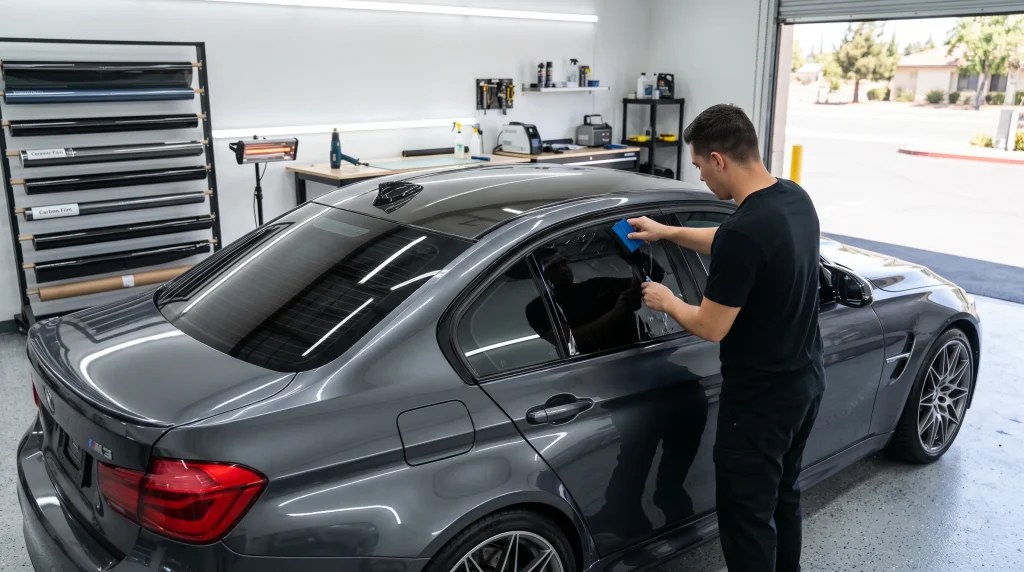
Here is why film type matters.
Two tints can look similar from outside while performing very differently against infrared energy and solar heat.
Shade alone does not tell the full story.
What Is Carbon Window Tint?
Carbon window tint contains carbon particles within the film.
Carbon film became popular as an alternative to traditional dyed films because carbon particles can help absorb infrared energy while offering good color stability.
Rayno explains that carbon window film uses carbon particles that can block infrared light and help keep vehicle interiors cooler.
Carbon films can also resist the type of fading commonly associated with lower-grade dyed films.
Rayno’s MonoCarbon window film is one example of a carbon automotive tint. According to Rayno, MonoCarbon is designed for heat rejection, clarity, durability, color stability, and UV protection.
For drivers comparing heat rejection window tint in Rancho Cordova, carbon film can be a strong step up from entry-level dyed tint.
Benefits of Carbon Window Tint
Carbon film may offer:
- Infrared heat reduction
- UV filtering
- Good color stability
- A non-metallic construction
- A darker appearance without relying only on dye
- Better heat performance than many simple dyed films
Carbon film is not perfect.
The size and structure of carbon particles can affect how light passes through the film.
Rayno explains that larger carbon particles can redirect light inside some films, which may contribute to haze or glare.
That difference becomes important when comparing traditional carbon film with ceramic and nano carbon ceramic technology.
What Is Ceramic Window Tint?
Ceramic window tint uses very small ceramic particles rather than relying on conventional dye or metallic particles for its heat-control properties.
Ceramic particles can interact with infrared energy while maintaining strong optical clarity.
One reason drivers seek ceramic tint is the combination of heat rejection and visibility.
A ceramic film can provide strong solar performance without requiring extremely dark glass.
This is useful for drivers who want heat rejection window tint in Rancho Cordova but do not necessarily want the darkest shade available.
Benefits of Ceramic Window Tint
Depending on the product, ceramic window tint may offer:
- Strong infrared heat rejection
- UV filtering
- Good outward visibility
- Low haze
- Glare reduction
- Non-metallic construction
- Heat control without requiring extremely dark tint
The real question is how a particular ceramic product is made.
Not every film labeled “ceramic” performs the same way. Particle quality, film construction, adhesive, manufacturing process, shade, and product series can all affect performance.
This is why comparing actual film specifications makes more sense than choosing based only on the word “ceramic.”
Ceramic vs Carbon Window Tint for Heat Rejection
When comparing ceramic vs carbon film, heat rejection is usually the first issue drivers want to discuss.
Carbon film can reject infrared energy and help reduce cabin heat.
Ceramic film can also block infrared energy, and higher-grade ceramic films are often designed with stronger infrared rejection and clearer visibility.
A simple comparison looks like this:
| Feature | Carbon Window Tint | Ceramic Window Tint |
|---|---|---|
| Heat rejection | Good | Often higher depending on film |
| Infrared control | Good | Often stronger |
| UV filtering | Strong with quality film | Strong with quality film |
| Visibility | Good | Often clearer |
| Haze | Can vary | Usually lower with quality film |
| Color stability | Good | Good with quality construction |
| Metallic interference | No | No |
| Best use | Drivers seeking solid heat control | Drivers placing more weight on heat rejection and clarity |
There is one more option worth knowing about.
Rayno does not treat carbon and ceramic as an either-or choice in its Phantom line.
The company combines both materials.
What Is Nano Carbon Ceramic Window Tint?
Rayno developed its Phantom Series using what it calls Nano Carbon Ceramic technology.
Instead of choosing between traditional carbon and ceramic particles, the film combines both.
Rayno states that its technology reduces carbon particles to a nanoscale size and combines them with ceramic particles. The goal is to retain carbon’s durability and color stability while gaining the clarity and infrared performance associated with ceramic materials.
Learn more about Rayno Nano Carbon Ceramic window tint.
This approach is especially relevant when discussing heat rejection window tint in Rancho Cordova because drivers are often looking for several benefits at once.
They may want:
- Heat reduction
- Clear visibility
- Stable color
- UV filtering
- Less glare
- Long-term durability
Rayno’s Phantom Series is built around this combination of carbon and ceramic materials.
Royal Tint is a Rayno-certified vendor and installer, so our team can explain the available film options based on your vehicle and what you want from your tint.
Understanding Infrared Heat Rejection
Heat rejection window tint can sound confusing because several measurements may appear on film specifications.
One of the terms you may see is infrared rejection, often shortened to IR rejection.
Infrared radiation makes up part of the solar energy that contributes to the heat you feel coming through automotive glass.
A film designed to reject infrared energy can reduce some of that heat transmission.
Rayno’s Phantom II window film, for example, is designed to block up to 97% of infrared rays in certain configurations.
That does not mean the film blocks 97% of every form of solar energy entering the vehicle.
Infrared rejection and total solar energy rejection are different measurements.
VLT
VLT means Visible Light Transmission.
It describes how much visible light passes through the window film.
A lower VLT means a darker appearance. A higher VLT means more visible light passes through.
IR Rejection
Infrared rejection describes how much infrared radiation is rejected within the wavelength range used for that product’s test.
TSER
TSER means Total Solar Energy Rejected.
This measurement accounts for a broader share of solar energy rather than looking only at one infrared range.
When comparing heat rejection window tint in Rancho Cordova, do not judge a film by shade alone. Look at the film technology and the performance measurements that matter for your goals.
Does Darker Tint Reject More Heat?
Not always.
This is one of the biggest misconceptions about automotive window tint.
A very dark film can reduce visible light without automatically providing the highest infrared heat rejection.
A lighter high-performance ceramic or nano carbon ceramic film may reject more infrared heat than a darker low-grade dyed film.
What this means is that darkness and heat rejection are not the same thing.
If heat control is your priority, ask about the film’s solar and infrared performance rather than simply requesting the darkest shade.
This also gives drivers more flexibility.
Someone who likes a lighter appearance may still be able to get strong heat rejection with the right film technology.
Carbon vs Ceramic Tint for Clarity
Visibility matters during the day and at night.
Window film should help with heat and glare without making driving unnecessarily difficult.
Traditional carbon particles can be larger than ceramic particles. Rayno explains that those larger particles may scatter or redirect light within the film, which can lead to haze.
Ceramic particles are much smaller and can maintain clearer visibility.
Rayno’s nano carbon ceramic approach reduces the size of the carbon particles while combining them with ceramic material.
The goal is to reduce the haze associated with traditional carbon particles while keeping the durability and heat-control benefits drivers want.
For people who spend a lot of time driving at night, commute before sunrise, or want good outward visibility, clarity deserves just as much attention as tint shade.
UV Protection and Interior Protection
Heat is not the only reason to tint your windows.
UV radiation can reach the vehicle interior through glass and contribute to sun exposure and fading over time.
Quality automotive films can filter much of that UV radiation.
Rayno states that its MonoCarbon film provides 99% UV rejection, while its nano carbon ceramic products are also made with UV protection in mind.
Heat rejection window tint in Rancho Cordova may help reduce UV exposure to:
- Seats
- Dashboards
- Door panels
- Steering wheels
- Interior trim
- Upholstery
- Leather surfaces
- Vehicle occupants
Window film will not stop every form of interior aging. Heat, visible light, material type, use, maintenance, and age still matter.
Still, UV filtering adds another reason to consider quality film instead of choosing tint based only on appearance.
Which Window Tint Is Better for Sacramento Area Heat?
For drivers focused mainly on heat control, a higher-performing ceramic or nano carbon ceramic film will often make more sense than a simple dyed film.
Carbon tint remains a good choice for drivers who want durability, UV filtering, stable color, and improved heat rejection.
Ceramic film may appeal more to drivers who put greater weight on infrared rejection and optical clarity.
Nano carbon ceramic film offers another route by combining both materials.
Here is a simple way to think about it.
Consider Carbon Tint If:
- You want better heat performance than basic dyed tint
- You want good color stability
- You prefer non-metallic window film
- You want UV filtering
- You want solid everyday performance
Consider Ceramic or Nano Carbon Ceramic Tint If:
- Heat rejection is one of your biggest concerns
- You spend a lot of time driving in direct sun
- You want strong infrared control
- Clear outward visibility matters
- You want high-performance film without relying on extremely dark shades
- You want a premium tint option for a vehicle you plan to keep
For many Sacramento-area drivers, the choice comes down to the balance between heat rejection, clarity, shade, and long-term performance.
Choosing Heat Rejection Window Tint for Your Vehicle
Before selecting heat rejection window tint in Rancho Cordova, think about how you actually use your vehicle.
Where Do You Park?
A car parked outdoors for most of the workday receives different sun exposure than a vehicle kept inside a garage.
How Much Do You Drive?
Someone commuting daily through Sacramento traffic may place more weight on heat and glare control than someone who drives only occasionally.
How Dark Do You Want the Windows?
Tint shade affects appearance and visible light, but it does not tell you the full heat-rejection story.
Is Nighttime Visibility Important?
If you frequently drive after dark, talk with the installer about shade and clarity before choosing a film.
How Long Will You Keep the Vehicle?
Film durability and color stability may matter more when you plan to own the vehicle for many years.
Is Heat Your Main Goal?
Tell the installer directly.
If you want heat rejection rather than simply darker glass, that should guide the film recommendation.
You can learn more about Royal Tint’s window tint services or view our locations before scheduling.
Why Rancho Cordova Drivers Choose Royal Tint
Royal Tint provides professional window tinting from two locations serving Sacramento, CA, Rocklin, CA & Rancho Cordova, CA.
Our Rancho Cordova location is:
Royal Tint Sacramento / Rancho Cordova
3515 Sunrise Blvd Suite #21
Rancho Cordova, CA 95742
(916) 502-2994
Our Rocklin location is:
Royal Tint Rocklin
5600 Pacific St Suite 100
Rocklin, CA 95677
(916) 840-0030
Royal Tint is Rayno certified and is a Rayno vendor. We carry warranties on our products and services.
Drivers can also come to Royal Tint for:
- Window tinting
- Paint protection film
- Ceramic coating
- Windshield protection film
- Auto detailing
- Paint correction
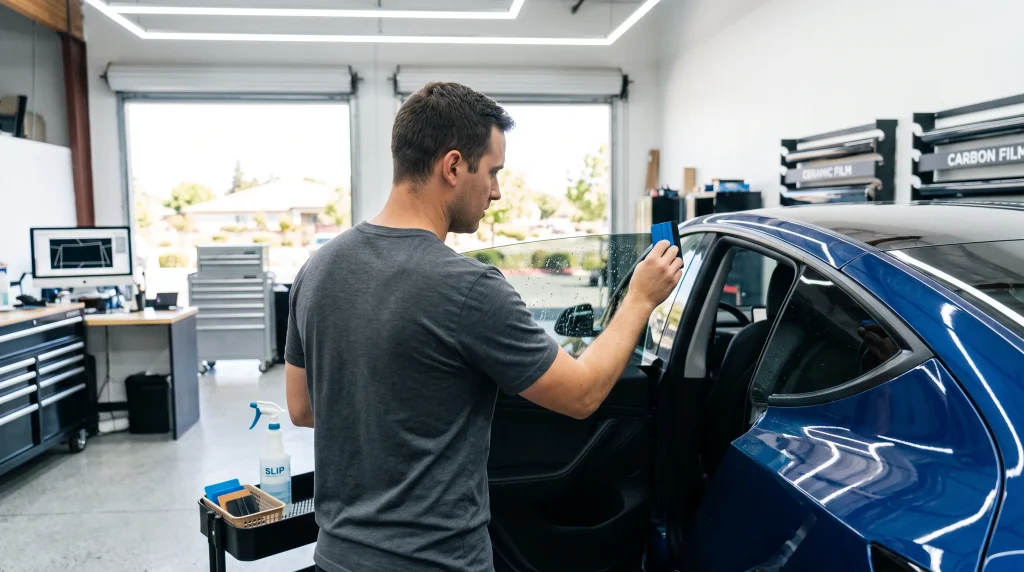
Royal Tint has more than 700 combined customer reviews with a 5-star rating based on the review information supplied by Royal Tint.
Our Rancho Cordova location is convenient for drivers coming from Sacramento, CA, Folsom, CA, Fair Oaks, CA, Carmichael, CA, Citrus Heights, CA, Orangevale, CA, Elk Grove, CA, and El Dorado Hills, CA.
Our Rocklin location also serves drivers around Rocklin, CA, Roseville, CA, Granite Bay, CA, Loomis, CA, Lincoln, CA, and Antelope, CA.
If you are trying to decide between carbon, ceramic, or nano carbon ceramic heat rejection window tint, call us and tell us what matters most to you.
Heat Rejection Window Tint FAQs
1. Is ceramic tint better than carbon tint for heat rejection?
Ceramic film is often selected when infrared heat rejection and clarity are high priorities. Carbon film can also provide good heat control and durability. Performance varies by product, so compare the actual specifications rather than relying only on the material name.
2. Does carbon window tint keep a car cooler?
Carbon particles can help block infrared energy, which can reduce some of the heat entering through vehicle glass. Rayno’s MonoCarbon film is made for heat rejection along with UV filtering, color stability, and durability.
3. What is nano carbon ceramic window tint?
Nano carbon ceramic tint combines very small carbon particles with ceramic particles. Rayno uses this technology in its Phantom Series to combine carbon’s color stability and durability with ceramic-related heat rejection and clarity.
4. Does darker window tint reject more heat?
Not necessarily. Tint darkness measures visible light transmission, not total heat performance. A lighter high-performance ceramic film may reject more infrared heat than a darker low-grade film.
5. How much infrared heat can ceramic tint reject?
The percentage depends on the product. Rayno states that its Phantom II series can block up to 97% of infrared rays in certain film configurations. Ask about the exact film specifications when comparing options.
6. Does heat rejection window tint block UV rays?
Quality carbon and ceramic films can provide strong UV filtering. Rayno states that its MonoCarbon window film provides 99% UV rejection. UV performance should be checked for the exact film you choose.
7. Where can I get heat rejection window tint in Rancho Cordova?
Royal Tint installs Rayno automotive window film at 3515 Sunrise Blvd Suite #21, Rancho Cordova, CA 95742. Call (916) 502-2994 for the Rancho Cordova location or (916) 840-0030 for Rocklin. You can also contact Royal Tint online to schedule an appointment.
Find the Right Heat Rejection Window Tint in Rancho Cordova
Heat rejection window tint in Rancho Cordova is about more than making your windows darker.
Carbon film can provide good heat rejection, UV filtering, durability, and color stability. Ceramic technology can provide strong infrared performance with very good clarity. Rayno’s nano carbon ceramic films combine both materials to address heat, visibility, glare, and long-term performance.
The right choice depends on your vehicle, driving habits, preferred shade, and how much you care about heat rejection.
Royal Tint serves Sacramento, CA, Rocklin, CA & Rancho Cordova, CA and nearby communities.
Call (916) 502-2994 for our Rancho Cordova location or (916) 840-0030 for our Rocklin location.
You can also contact Royal Tint to schedule an appointment and compare Rayno window tint options for your vehicle.
Sources
- Nano Carbon Ceramic Window Tint Technology
Publisher: Rayno Window Film
Publication Date: 2026
Used for: Carbon vs ceramic particle characteristics, infrared heat rejection, haze, visibility, and nano carbon ceramic technology. - MonoCarbon Window Film
Publisher: Rayno Window Film
Publication Date: No publication date listed
Used for: Carbon film heat rejection, UV rejection, color stability, durability, and solar-energy performance. - Phantom II Window Film
Publisher: Rayno Window Film
Publication Date: No publication date listed
Used for: Nano carbon ceramic technology, infrared rejection, and clarity. - Phantom Series
Publisher: Rayno Window Film
Publication Date: No publication date listed
Used for: Carbon ceramic construction, heat rejection, color stability, visibility, and UV protection. - Rayno Window Film FAQs
Publisher: Rayno Window Film
Publication Date: 2026
Used for: Rayno’s description of nano carbon ceramic tint and film-selection information. - Royal Tint
Publisher: Royal Tint
Publication Date: Website page
Used for: Rancho Cordova and Rocklin locations, Rayno window tint services, and business information. - About Royal Tint
Publisher: Royal Tint
Publication Date: Website page
Used for: Rayno dealer relationship, certification information, business history, and location details.